


Advanced Spine Care Close to Home
Get total disc replacement and spine surgery in Newburgh, NY, Westchester, and Danbury from board-certified spine surgeon Dr. Dean Perfetti.

A spine surgery second opinion is a visit with another spine specialist before you agree to surgery. They look at your symptoms, exam, scans, and past treatment. They might agree with the first plan, change it, or bring up new choices, like more non-surgical care, a smaller procedure, or a different surgery. In a 2017 study, 485 people whose doctors said they needed spine surgery got a second opinion. About 6 in 10 of them came away with a different diagnosis. The right treatment starts with the right diagnosis. A scan alone doesn't decide your care. Two skilled surgeons can look at the same case and see it differently. A second opinion lets you hear both sides before you decide.
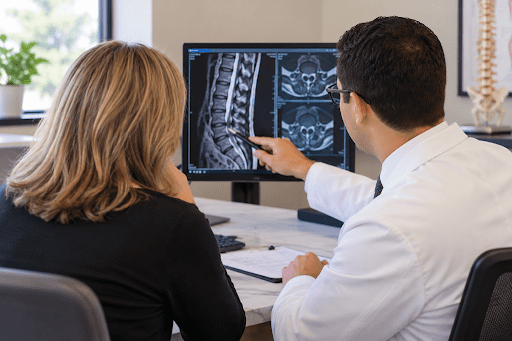
Most spine problems have more than one possible fix. Doctors can treat a herniated disc, spinal stenosis, or a slipped vertebra in several ways. The best choice depends on how much the problem limits you, which nerves are involved, how stable your spine is, what you've already tried, and what matters most to you.
Surgeons also have different training and habits. One surgeon might lean toward spinal fusion. Another might try a smaller surgery first, like endoscopic spine surgery or disc replacement. Neither is automatically wrong. A second opinion shows you whether the plan holds up when a new set of eyes looks at it.
Many second opinions agree with the first one. That's still worth knowing. You start treatment with two specialists on the same page.
A good second opinion starts with your story, not your scan. Your doctor will ask where the pain starts, whether it moves into an arm or leg, what makes it worse, and whether you have numbness, tingling, weakness, or trouble walking.
Next comes a physical exam. The doctor checks your strength, reflexes, feeling in your arms and legs, and how you move. This shows which nerve is likely the problem and whether it matches your scans.
Then the doctor looks at the scans themselves, not just the written report. X-rays show how your spine lines up and moves. An MRI shows discs, nerves, and soft tissue. A CT scan shows bone in detail. Your past care counts too, like physical therapy, medicine, shots, and any past spine surgery.
A second opinion makes the most sense when the surgery is big or the plan isn't clear to you. Consider a second opinion if:
| Your situation | Why a second look helps |
|---|---|
| Your doctor recommends spinal fusion | Fusion joins spine bones for good. Ask why it beats other options. |
| Surgery on several parts of your spine | Bigger surgery means a longer recovery. |
| You already had spine surgery | A repeat surgery is harder, and the cause of new pain isn't always clear. |
| Your MRI and symptoms don't match | Often only one finding on your report causes your pain. |
| You heard surgery is your only option | Ask why non-surgical care or a smaller surgery won't work. |
| You feel rushed or unsure | Another specialist can walk you through the plan. |
Go to the ER right away if you suddenly lose bladder or bowel control, feel numb in your groin or inner thighs, or your legs get weak fast. These can signal severe pressure on the nerves, such as cauda equina syndrome.
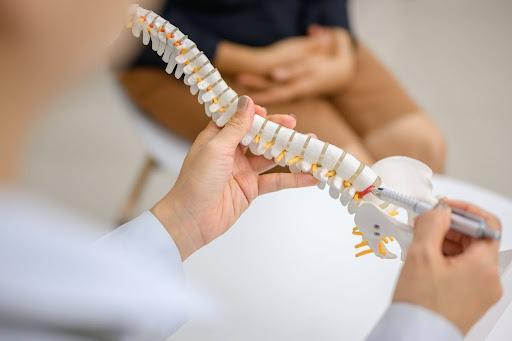
MRIs pick up a lot. They often show disc bulges, arthritis, or narrowing in people with no back pain at all. So something on your report isn't always the cause of your pain.
A spine specialist looks for a match between your scan and your body. Leg pain that follows one nerve, numbness in one part of your foot, or weakness in one muscle can point to the spot that matters. When your symptoms and scans match, the plan is on solid ground. When they don't, it's worth talking about more tests or a different approach.
A second opinion won't always give you a different answer, and you might still need surgery. What it does is lay out your real options.
Options that may be discussed include:
| Option | What it is |
|---|---|
| Non-surgical care | Physical therapy, medicine, activity changes, or spine shots. Often the first step for disc and nerve problems. |
| Endoscopic spine surgery | A tiny camera and tools go through a cut under an inch long to take pressure off a nerve. |
| Minimally invasive decompression | Removes the bone or disc pressing on a nerve through small cuts. |
| Total disc replacement | Swaps a damaged disc for an artificial one so your spine keeps moving. Works for some neck and low back patients. |
| Spinal fusion | Joins spine bones together. Still the right choice for many problems, especially an unstable spine. |
The goal is a plan you understand: why your doctor chose it, what else was on the table, and what would change it.

The right questions help you compare your options. The American Academy of Orthopaedic Surgeons suggests asking about other options, risks, and recovery before any bone or joint surgery.
Helpful questions include:
| Ask | Why it matters |
|---|---|
| What's causing my symptoms? | Makes sure treatment targets the real source of your pain. |
| Which finding on my scans matters most? | Not everything on a report causes pain. |
| What if I wait or keep trying non-surgical care? | You learn which signs mean you shouldn't wait. |
| Could a smaller surgery work for me? | Endoscopic or minimally invasive surgery fits some cases. |
| Is disc replacement an option instead of fusion? | It works for some patients. Ask what decides it. |
| What are the risks, and what's recovery like? | Ask about time off work, driving, and lifting. |
Bring your scans on a disc or through a patient portal, plus the written reports. Specialists want to see the pictures, not just the summary. Also bring notes from any past spine surgery, records of shots and physical therapy, and a list of your medicines.
A short symptom timeline helps too. Note when your pain started, where it travels, what helps or hurts, what you've tried, and which daily tasks are now hard, like sitting, sleeping, lifting, or driving. Bring the name of any surgery your doctor offered. Check with your insurance plan to see if you need a referral.
Somers Orthopaedic Surgery & Sports Medicine Group offers non-surgical spine care, endoscopic spine surgery, disc replacement, and traditional spine surgery, including fusion.
Dean C. Perfetti, MD, MPH, is a fellowship-trained orthopaedic spine surgeon who sees patients in Mount Kisco, Carmel, and Newburgh, New York, and Danbury, Connecticut.
Dr. Perfetti performed the first fully endoscopic microdiscectomy at Northwell Health's Northern Westchester Hospital. He performs many types of spine surgery, so his advice isn't tied to one procedure. He starts with your diagnosis and finds the option that fits.
No. Second opinions are a normal part of planning a big surgery, and many surgeons welcome them. Some insurance plans even require one before certain spine surgeries.
Ask each doctor to explain their thinking. Most differences come down to which part of the spine causes the pain, how soon you need treatment, or which surgery fits best. Some patients share both opinions with their first surgeon or get a third opinion.
Yes, it's one of the most common reasons to get one. Fusion stops motion in that part of your spine for good. Ask why your doctor chose it and whether a smaller surgery or disc replacement could work.
Yes. This is one of the best times to get one, especially if your pain came back, new pain started, or your doctor suggested another surgery. Bring your surgery report and any scans from before and after.
Not always. A recent MRI or CT scan is often enough to start. Your doctor might order new scans if yours are old, your symptoms changed, or they need a different view.
Did a doctor say you need spine surgery? Somers Orthopaedic Surgery & Sports Medicine Group can review your scans, symptoms, and past treatment and explain your options. Call 845-278-8400 or request an appointment to schedule a spine evaluation in New York or Connecticut.
*This article is for educational purposes only and does not replace professional medical advice, diagnosis, or treatment. Talk with a qualified healthcare provider about your specific symptoms and treatment options.


